Have you ever felt overwhelmed by everything you need to take care of? Commitments, chores, work, relationships. You may think that you don’t have enough time. Or you may think that you need to be busy to make progress. But chances are, you are not being selective with your time and energy. You don’t have to run around all day to ‘have it all’. And there’s a concept called essentialism that can certainly help you with that.
What’s essentialism?
In his book “Essentialism: The Disciplined Pursuit of Less”, Greg McKeown defines essentialism as the deliberate practice of saying no and focusing only on what is truly important. Simply put, focus on less but better. Sounds great, right?
Of course, it’s not an easy concept to put into practice, especially if you are living a busy life and have a lot on your plate. But even applying some part of its core teachings can really change your life for the better. So, let’s get into it.
One of the first things you need to start doing is asking more tough questions. A huge part of essentialism is being able to pause constantly and ask yourself if you are investing in the right activities at that moment.
According to McKeown, the core mindset of an essentialist is based on:
- Individual choice: we can choose how to spend our time and energy. You may not always have control over your options, but you always have control over your choices.
- Prevalence of noise: almost everything in life is noise, and only a few things are exceptionally valuable.
- The reality of trade-offs: we can’t have it all or do it all. You can do anything, but you can’t do everything.
Those may sound like hard truths, but once you internalize them and realize that things generally work that way, you will have the power to start changing your situation and take control. You can either make the hard choices yourself or allow others -your boss, spouse, or friends- to decide what’s important for you.
“If you don’t prioritize your life, someone else will”. – Essentialism, Gregor McKeown
How can you implement it?
The author defines 3 steps to implement essentialism in your life, and they are: explore, eliminate, and execute. Let’s dig into each one of them.
Explore
The first step towards implementing essentialism in your life is to start differentiating the trivial thing in your life from the vital ones: ‘Discerning the trivial many from the vital few’.
To do this, you will need to create some space to explore, reflect and think about your life in general. If you want to simplify your life, you need to look at the bigger picture and the only way to do that is by having some reflecting time with yourself.
Practice being unavailable and focus on what you want to achieve in your life. If you can see the big picture, you will get a sense of what’s really important. You’ll realize that maybe staying an hour later at work instead of meeting your parents for dinner is not a good investment of your time.
Creating some space in your daily life can be as simple as having a journal practice. Journaling is a great way to reflect on your life, your feelings, and your current situation. Reviewing your entries every three months or so can help you see what your life looks like and identify patterns to understand yourself better. Maybe you always complain about not spending enough time with your kids, or about an annoying coworker that drowns your energy, identifying these types of things will help you live with more intention.
To discover new things and possibilities, allow yourself to play. Just do something for the sake of doing it, this can be playing a sport, an instrument, drawing, or any other thing you could think of. The focus is not on the result but on the process of doing something you enjoy. Play leads to brain plasticity, adaptability, and creativity; and it’s the perfect way to let go of expectations and explore more.
While in the phase of exploring, remember to pay attention to one of your greatest assets: your sleep. Sleeping is one of our most basic needs and can really affect our overall mood and productivity. It’s also one of the first things we ‘skip’ if we are busy or have a lot of things to do. Taking the time to rest and recharge is key to improving your life, so make it a priority.
Eliminate
Once you have a wider view of your options, it’s time to open some space. Cutting out the trivial many is the next step, and probably the harder one.
The basis for making this happen is having a clear purpose for the things that matter to you. Journal about your priorities and why they are important. This goes hand in hand with the definition of your values, so use them as your north start in this process. For example, one of your priorities could be to exercise every day. This may be important for you because you want to keep yourself active and have a healthy life, which is coherent with your values of discipline and health.
Being clear on your essentials makes it easier to say no to what is not in alignment with that. Saying ‘no’ to the things that won’t make a positive impact in your life is not being selfish. It’s what you need to start doing if you wanna live your life on your own terms. It’s not easy, especially with family and friends, and even more, if you are a people-pleaser, but boundaries and limits are crucial to make this process happen.
“People are effective because they say ‘no’, because they say ‘this isn’t for me’”. – Essentialism, Gregor McKeown
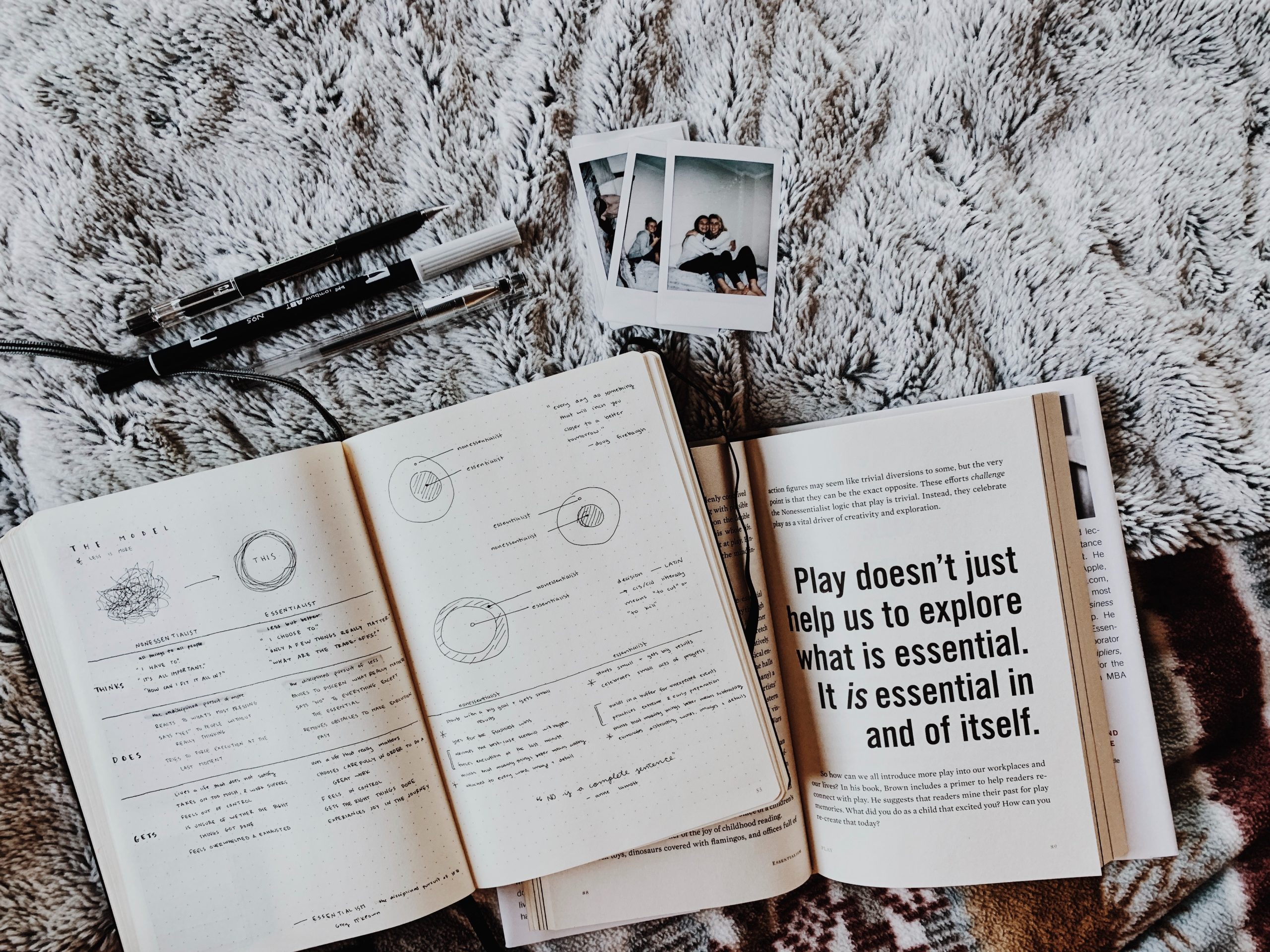
Eliminating the things that are not for you will free up your time and mental space. Stop doing things just because everybody is doing them or because of social pressure. The FOMO or ‘Fear Of Missing Out’ is not real, as you cannot possibly do everything at the same time, so you need to choose when and where you put your time and energy.
Sometimes is not easy to cut out options, so another way of dealing with this is to limit your exposure. Continuing with the example of exercising every day, if you have friends that are always inviting you to drink and eat fast food you have two options: cutting them out or try and limit your time with them. Maybe you can suggest a different plan or just swing by for an hour and have a non-alcoholic drink. It’s hard, I know, but the returns you will have if you keep yourself accountable for what really matters to you will be huge.
Execute
Once you explore and eliminate, the last step is the execution. The main focus here is to invest the time you save into creating a system for removing obstacles and making execution as easy as possible.
Remember that everything you do or don’t is ultimately a choice you make, so a good mindset shift here is to change ‘I have to’ for ‘I choose to’ in your vocabulary. This way you will see clearly how is in your power to select the things that will take up your time and energy.
“Everything changes when we give ourselves permission to be more selective in what we choose to do.” – Essentialism, Gregor McKeown
To make execution effortless, you need to always plan for the unexpected and create a buffer. Things are not going to be the way you plan every time, so it’s better to have more scenarios in mind and try to solve them in advance so you have more peace of mind if the time to implement that ‘plan B’ comes.
Also, be aware of where you put your efforts and subtract the ones that are not producing results. The Pareto Principle states that for many outcomes, roughly 80% of consequences come from 20% of causes. Take some time to evaluate your processes and focus on the efforts that are moving your life forward.
Having solid habits and routines will also help you a lot with execution. Try different morning routines to make the most of your days and focus on what’s important. Use triggers to remind you of your priorities. For example, leave your exercise clothes ready the night before. And make time for flow in your daily life to gain momentum and focus.
Trying to implement essentialism in your life can feel overwhelming. When you feel that, take a step back, breathe, get present at the moment, and ask yourself what the most important thing is now. Remember to pause and reflect, and always celebrate your small wins to motivate you to keep going.
What essentialism can look like in your life?
Now that you have a better idea of what essentialism is and how you can implement it, let’s dig into some examples of essentialism in action in different areas of your life.
Relationships
- Say no to events that conflict with your priorities
- Limit the time you spend with loved ones that drown your energy
- Have date nights every week with your spouse
- Plan quality time with your uplifting friends
Mind and body
- Invest in a course you always wanted to take
- Read a book on a topic that interests you
- Cut out your social media consumption time
- Limit your sugar and alcohol consumption
- Move your body daily
Professional life
- Prioritize tasks that have the bigger impact
- Delegate non-essential tasks
- Clean out your workspace from clutter
Financial
- Cut out unnecessary expenses
- Buy quality items that will last longer
- Start investing or saving more money monthly.
As you can see, applying essentialism is a great way to improve your life. It will help you prioritize the things that matter to you and align your choices with them. This will give you the confidence to go after your goals, and it will give you back your time and energy to spend on your essentials. I definitely recommend you read the whole book “Essentialism: The Disciplined Pursuit of Less” by Greg McKeown, to get more details and actionable tips on this mindset.
Let me know in the comments what is one thing you will prioritize in your life with this approach.
Disclaimer: Some of the links in this post are affiliate links, meaning that if you click through & make a purchase, I will receive a small commission at no extra cost to you. Thank you for your support!
Pin it!